The Best Exercises for Lower Back Pain
Back pain affects millions of Australians. It can make sitting, lifting and sleeping uncomfortable. The good news is that movement is one of the most effective treatments. In fact, most health professionals recommend staying active over prolonged bed rest.
Why Exercise Helps Back Pain
Exercise strengthens the muscles that support your spine. It also improves flexibility, circulation and joint health. Furthermore, regular movement helps calm a sensitive nervous system, which can reduce pain over time.
Before you start, however, remember that every back is different. If you have sudden severe pain, numbness, weakness or pain after a fall, see a doctor first.
1. Pelvic Tilts
Lie on your back with your knees bent. Then gently flatten your lower back into the floor by tightening your stomach. Hold for five seconds and relax. Repeat ten times. This simple movement eases stiffness and activates the deep core.
2. Knee-to-Chest Stretch
Lie on your back and bring one knee toward your chest. Hold for 20 to 30 seconds, then switch sides. This stretch relieves tension in the lower back and hips.
3. Cat-Cow Stretch
Start on your hands and knees. Slowly arch your back, and then round it. Move gently and breathe steadily. Ten slow repetitions help mobilise the spine.
4. Bird-Dog
From hands and knees, extend one arm and the opposite leg. Keep your hips level. Hold for a few seconds before you switch sides. As a result, your core and back muscles learn to work together.
5. Glute Bridge
Lie on your back with your knees bent. Squeeze your buttocks and lift your hips. Pause at the top, then lower slowly. Strong glutes reduce the load on your lower back.
6. Hinging
Stand tall with your calves gently support against a chair, place your hands on your thighs and gently slide them down the front of your legs as you push your hips back over the chair.
How to Exercise Safely
Follow these simple guidelines:
- Move within a comfortable range
- Increase repetitions slowly over time
- Expect mild discomfort, but stop if sharp pain appears
- Stay consistent, since regular short sessions beat occasional long ones
Why See an Exercise Physiologist ?
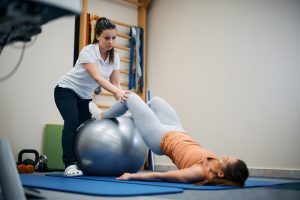
Generic exercises don’t suit everyone. An exercise physiologist assesses your movement, identifies the cause of your symptoms and designs a program for your needs. In addition, they correct your technique and time each progression carefully. That support keeps you safe and moving forward.
Strengthen Your Back Today
Persistent back pain doesn’t have to control your life. Book a session with JY Exercise Physiology and take the first step toward a stronger, more comfortable back.
At JY Exercise Physiology in Upper Mount Gravatt, Brisbane South, we specialise in evidence-based exercise programs for injury rehabilitation, chronic pain management, and general workplace wellness for all ages and abilities. Whether you have been dealing with knee pain for weeks or years, we are here to help you get back to doing what you love.
 147 Lumley Street, Upper Mount Gravatt QLD 4122, also offering home visits across Brisbane South including Sunnybank, MacGregor, Wishart, Runcorn, Eight Mile Plains and Surrounding areas.
 Call or text: 0421 967 711
 Email: admin@jyexercisephysiology.com
Learn more here: Injury Rehabilitation
Medicare CDM, NDIS, DVA, WorkCover QLD, Private Health and Other Insurances accepted. No referral required for private clients.