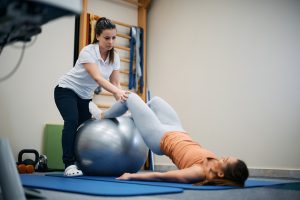
If you’ve ever felt a sharp, burning or electric pain travelling from your lower back through your buttock and down your leg, you may know sciatica all too well. It can make sitting, standing, driving and sleeping uncomfortable, and it often leaves people unsure whether to move or rest. So, can exercise help sciatica? For most people, the answer is yes
What Is Sciatica ?
Sciatica isn’t a diagnosis in itself. It describes pain along the path of the sciatic nerve, the longest nerve in the body, which runs from the lower back through the buttock and down the back of each leg. The nerve can become irritated or compressed by:
- A disc bulge or herniation pressing on a nerve root in the lower spine.
- Spinal stenosis, a narrowing of the space around the nerves.
- Tight or irritated muscles in the buttock, such as the piriformis.
- Joint stiffness or inflammation in the lower back or pelvis.
Symptoms can include pain, tingling, numbness or weakness in the leg or foot, usually on one side. Pain is often worse with prolonged sitting, coughing or sneezing.
Why Staying Active Beats Bed Rest
Years ago, people with sciatica were told to rest in bed until the pain settled. Current evidence shows this usually slows recovery. Prolonged rest can lead to stiffness, muscle weakness and deconditioning, while gentle movement helps by:
- Improving circulation to the irritated nerve and surrounding tissues.
- Reducing muscle guarding and stiffness.
- Keeping the spine and hips mobile.
- Supporting the body’s natural healing process.
- Maintaining confidence in movement, which matters for long-term recovery.
The key is choosing the right type and amount of movement for your stage of recovery.
Exercises That May Help Sciatica
1. Walking
Short, gentle walks are one of the best places to start. Begin with 5-10 minutes and build up as tolerated.
2. Pelvic tilts
Lie on your back with knees bent. Gently flatten your lower back into the floor by tightening your abdominals, hold for 5 seconds, then relax. Repeat 10 times.
3. Knee-to-chest stretch
Draw one knee toward your chest and hold for 20-30 seconds. Repeat on both sides to ease tension in the lower back and buttocks.
4. Piriformis stretch
Lying on your back, cross one ankle over the opposite knee and gently pull the uncrossed leg toward your chest. Hold for 20-30 seconds. This can help if tight buttock muscles are irritating the nerve.
5. Cat-cow stretch
On hands and knees, slowly alternate between arching and rounding your back. This promotes spinal mobility and relieves stiffness.
6. Bird-dog
From hands and knees, extend one arm forward and the opposite leg back, keeping your trunk steady. Hold briefly, then switch sides. It builds core and back stability.
7. Glute bridges
From hands and knees, extend one arm forward and the opposite leg back, keeping your trunk steady. Hold briefly, then switch sides. It builds core and back stability.
What to Be Careful With
During a flare-up, it’s wise to:
- Avoid heavy lifting, especially while twisting.
- Limit deep forward bends and sit-ups.
- Avoid high-impact activities such as running or jumping until symptoms settle.
- Break up long periods of sitting with regular movement breaks.
If an exercise sends pain shooting further down your leg, back off and try a gentler variation. A useful guide is that symptoms should stay stable or ease within minutes of finishing your exercises.
Long-Term Strategies
- Build core and glute strength to support your spine.
- Stay active with walking, swimming or cycling.
- Set up your workstation so you can change positions often.
- Learn safe lifting and bending techniques.
- Manage factors such as stress, sleep and body weight that can influence pain.
When to See a Doctor
Most cases of sciatica improve within weeks to a few months, but see a healthcare professional if your pain is severe, getting worse, or not improving. Seek urgent medical care if you experience numbness around the groin or inner thighs, new difficulty controlling your bladder or bowels, or rapidly worsening leg weakness. These can be signs of a serious condition that needs immediate attention.
Get Help With Your Sciatica in Brisbane South
At JY Exercise Physiology in Upper Mount Gravatt, Brisbane South, we specialise in evidence-based exercise programs for injury rehabilitation, chronic pain management, and general workplace wellness for all ages and abilities. Whether you have been dealing with sciatica for weeks or years, we are here to help you get back to doing what you love.
 147 Lumley Street, Upper Mount Gravatt QLD 4122, also offering home visits across Brisbane South including Sunnybank, MacGregor, Wishart, Runcorn, Eight Mile Plains and Surrounding areas.
 Call or text: 0421 967 711
 Email: admin@jyexercisephysiology.com
Learn more here: Injury Rehabilitation
Medicare CDM, NDIS, DVA, WorkCover QLD, Private Health and Other Insurances accepted. No referral required for private clients.