Hip pain can turn simple daily tasks, like walking the dog, climbing stairs, getting in and out of the car or sleeping through the night, into a struggle. It affects people of all ages, from active adults with muscle imbalances to older Brisbane residents living with osteoarthritis. While the causes vary, exercise is a cornerstone of treatment for most hip problems.
Common Causes of Hip Pain
Understanding what’s behind your pain helps guide treatment. Some of the more common causes include:
- Osteoarthritis: Gradual wear of the joint cartilage, leading to stiffness and aching, particularly after rest.
- Greater trochanteric pain syndrome (gluteal tendinopathy or bursitis): Pain on the outside of the hip, often worse when lying on that side or climbing stairs.
- Hip flexor strain: Pain at the front of the hip, common in people who sit for long periods or kick and sprint in sport.
- Muscle weakness or imbalance: Weak glutes and core muscles force the hip joint to absorb more load.
- Referred pain: Sometimes pain felt in the hip actually originates in the lower back or pelvis.
Why Exercise Helps
Your hip is a ball-and-socket joint surrounded by some of the largest muscles in your body. When these muscles are strong and flexible, they share the workload and protect the joint. When they’re weak or tight, the joint and surrounding tissues take extra strain.
Regular, appropriate exercise can:
- Reduce pain and stiffness.
- Improve joint stability and balance.
- Strengthen the glutes, core and thigh muscles.
- Maintain mobility and independence as you age.
- Support weight management, which reduces load on the hips.
Exercises That Help Reduce Hip Pain
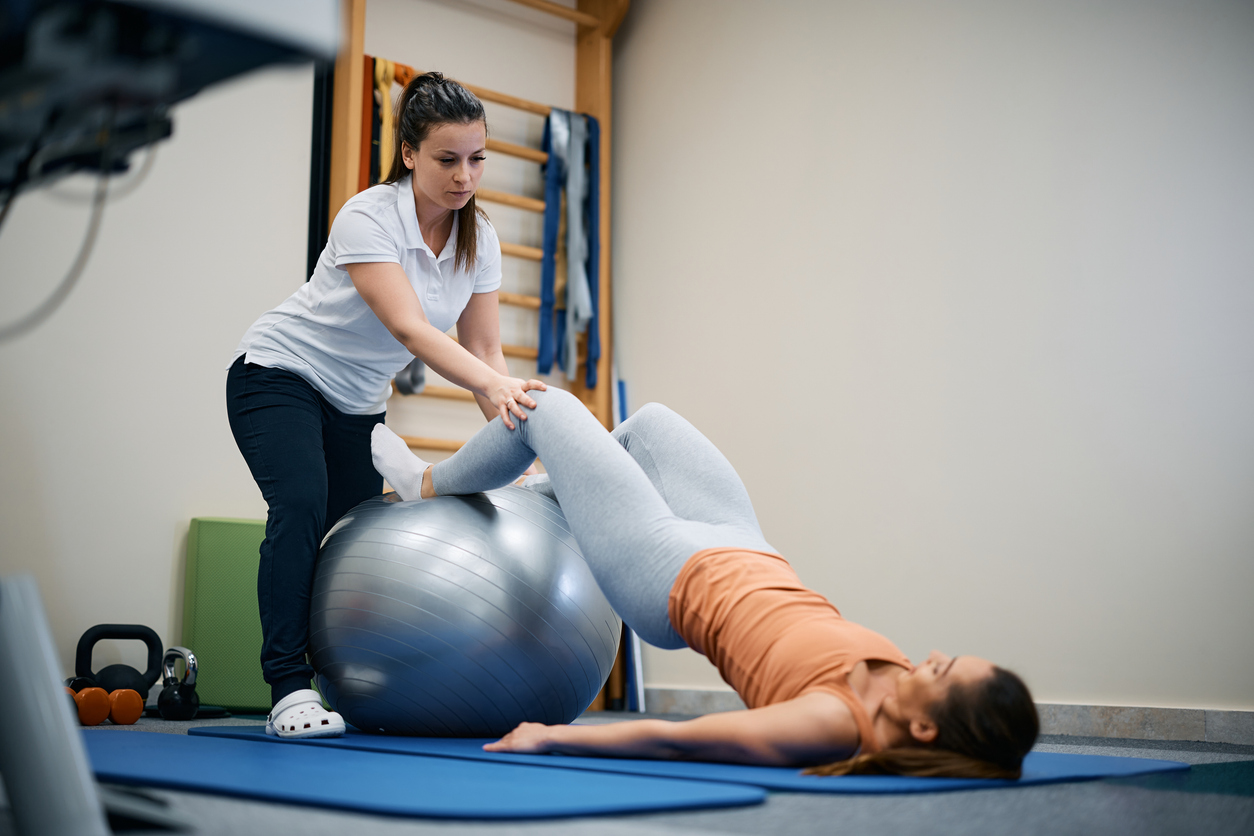
1. Glute bridges
Lie on your back with your knees bent and feet flat. Squeeze your glutes and lift your hips until your body forms a straight line from shoulders to knees. Pause, then lower slowly. Aim for 2-3 sets of 10-12 repetitions.
2. Clamshells
Lie on your side with knees bent and feet together. Keeping your feet touching, lift your top knee like a clamshell opening, then lower. This targets the gluteus medius, a key stabiliser of the hip and pelvis.
3. Standing hip abduction
Hold onto a bench or chair for support and lift one leg out to the side, keeping your toes pointing forward and your trunk upright. Lower slowly. Try 10-15 repetitions each side.
4. Hip flexor stretch
Kneel on one knee with the other foot in front. Tuck your pelvis under and gently shift your weight forward until you feel a stretch at the front of the hip. Hold for 20-30 seconds each side. This is especially helpful if you sit for long periods.
5. Knee-to-chest stretch
Lying on your back, draw one knee gently toward your chest and hold for 20-30 seconds. This releases tension in the hip and lower back.
6. Seated figure-four stretch
Sit tall in a chair, cross one ankle over the opposite knee and lean forward slightly until you feel a stretch in the buttock and outer hip.
7. Sit-to-stand practice
Stand up from a chair without using your hands, then sit back down slowly. This functional exercise builds the strength you need for everyday movements.
Tips for Success
- Warm up first. A few minutes of walking or gentle movement prepares your muscles and joints.
- Move within a comfortable range. Slight discomfort is common, but sharp pain is not.
- Progress slowly. Increase repetitions or resistance gradually over weeks.
- Stay consistent. Two to three structured sessions per week, plus daily walking, makes a real difference.
- Avoid sitting for too long. Stand up and move every 30-45 minutes.
When to Seek Medical Advice
Get prompt medical attention if your hip pain follows a fall, is severe or sudden, or comes with fever, swelling, redness or an inability to put weight on the leg. For ongoing aches and stiffness, an exercise physiologist can work out what’s contributing to your pain and design a safe, progressive program.
Get Help With Your Hip Pain in Brisbane South
At JY Exercise Physiology in Upper Mount Gravatt, Brisbane South, we specialise in evidence-based exercise programs for injury rehabilitation, chronic pain management, and general workplace wellness for all ages and abilities. Whether you have been dealing with hip pain for weeks or years, we are here to help you get back to doing what you love.
 147 Lumley Street, Upper Mount Gravatt QLD 4122, also offering home visits across Brisbane South including Sunnybank, MacGregor, Wishart, Runcorn, Eight Mile Plains and Surrounding areas.
 Call or text: 0421 967 711
 Email: admin@jyexercisephysiology.com
Learn more here: Tailored Exercise Programs
Medicare CDM, NDIS, DVA, WorkCover QLD, Private Health and Other Insurances accepted. No referral required for private clients.